
13 August 2025
Hevea Core vs Multi-Ply: What’s Beneath Your Timber Floor Matters
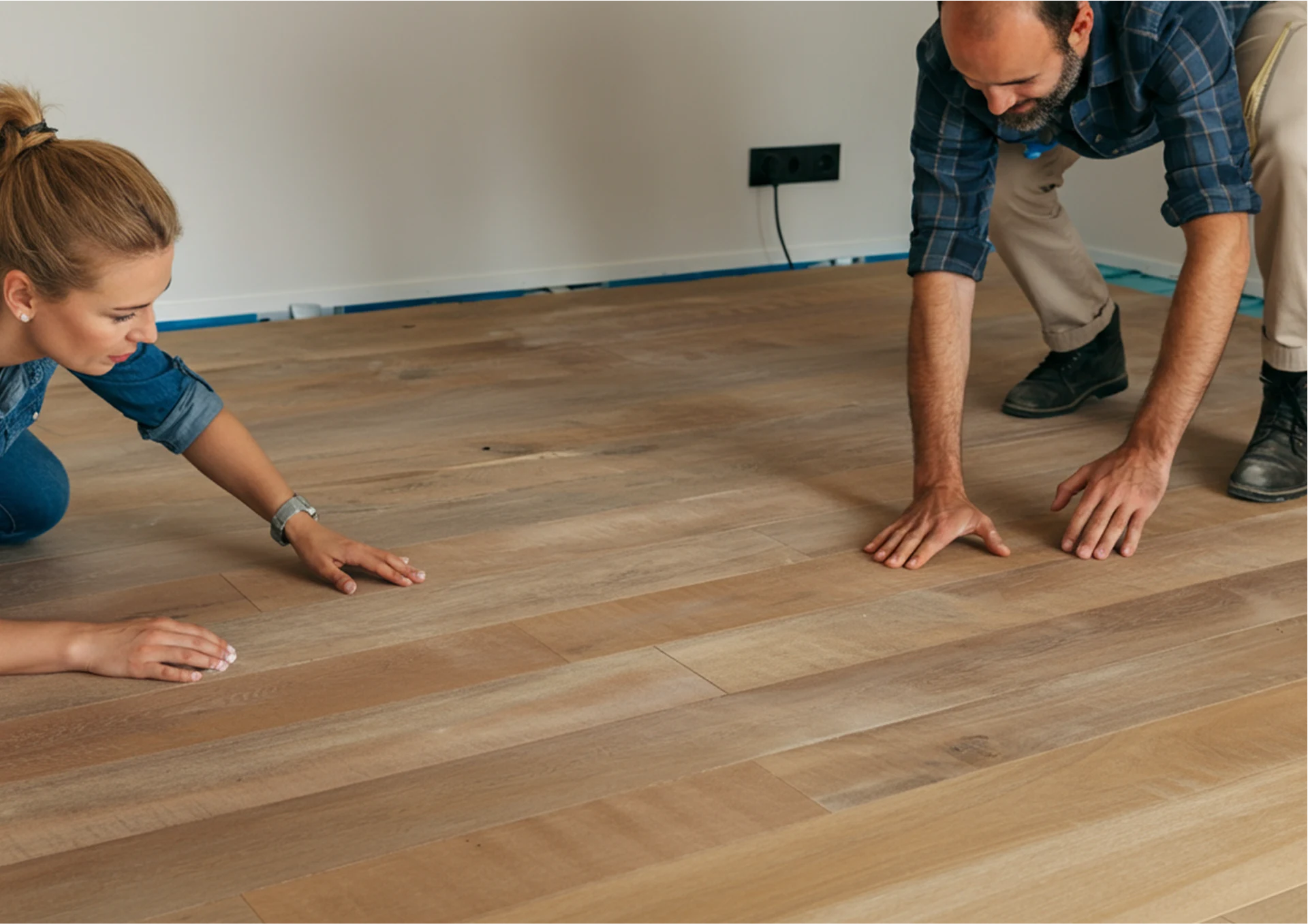
When choosing engineered timber flooring, most people focus on the surface — the colour, the grain, the finish. But what lies beneath is just as important. The core construction of your floor determines how it performs over time, especially in Australia’s variable climate.
Two common core types are Hevea and multi-ply. While both have their place, understanding the differences can help you make a smarter, longer-lasting choice.
What Is Hevea Core?
Hevea, also known as rubberwood, is a plantation-grown hardwood often used as the core layer in engineered timber flooring. It’s relatively dense and uniform, making it easy to work with and cost-effective for manufacturers.
However, Hevea has limitations — especially when paired with highly reactive Australian hardwoods like Spotted Gum or Blackbutt. These species are extremely hygroscopic, meaning they absorb and release moisture readily. When bonded to a Hevea core and installed using direct stick methods, movement in the hardwood layer can telegraph through to the surface, creating visible ridges or distortions over time.
Why Multi-Ply Is a Smarter Choice
Multi-ply engineered timber uses multiple thin layers of wood — often made from waste timber by-products — cross-laminated for strength and stability. This construction offers several advantages:
- Superior dimensional stability: The cross-layered structure resists movement from moisture and temperature changes.
- Sustainable sourcing: By using offcuts and by-products, multi-ply reduces waste and makes use of timber that would otherwise be discarded.
- Better performance with Australian hardwoods: The stable base helps manage the natural expansion and contraction of hygroscopic species, reducing the risk of telegraphing or cupping.
Installation Matters Too
Direct stick installation where boards are glued directly to the subfloor can amplify the risks associated with Hevea core. Without a stable base, any movement in the top layer transfers straight to the surface. This is especially problematic in homes with fluctuating humidity or poor subfloor preparation.
Multi-ply, on the other hand, offers more forgiveness. Its layered construction absorbs stress and helps maintain a smooth, consistent surface over time.
Engineered timber flooring is an investment and what’s inside matters just as much as what’s on top. While Hevea core may suit some applications, multi-ply offers greater stability, sustainability, and long-term performance, especially when paired with Australian hardwoods.
At Sunstar, we’re proud to offer multi-ply engineered timber that’s built to last and designed to perform. If you’re unsure which construction is right for your project, our team is here to help.
Care Line: 1300 081 999